Careers and Transition

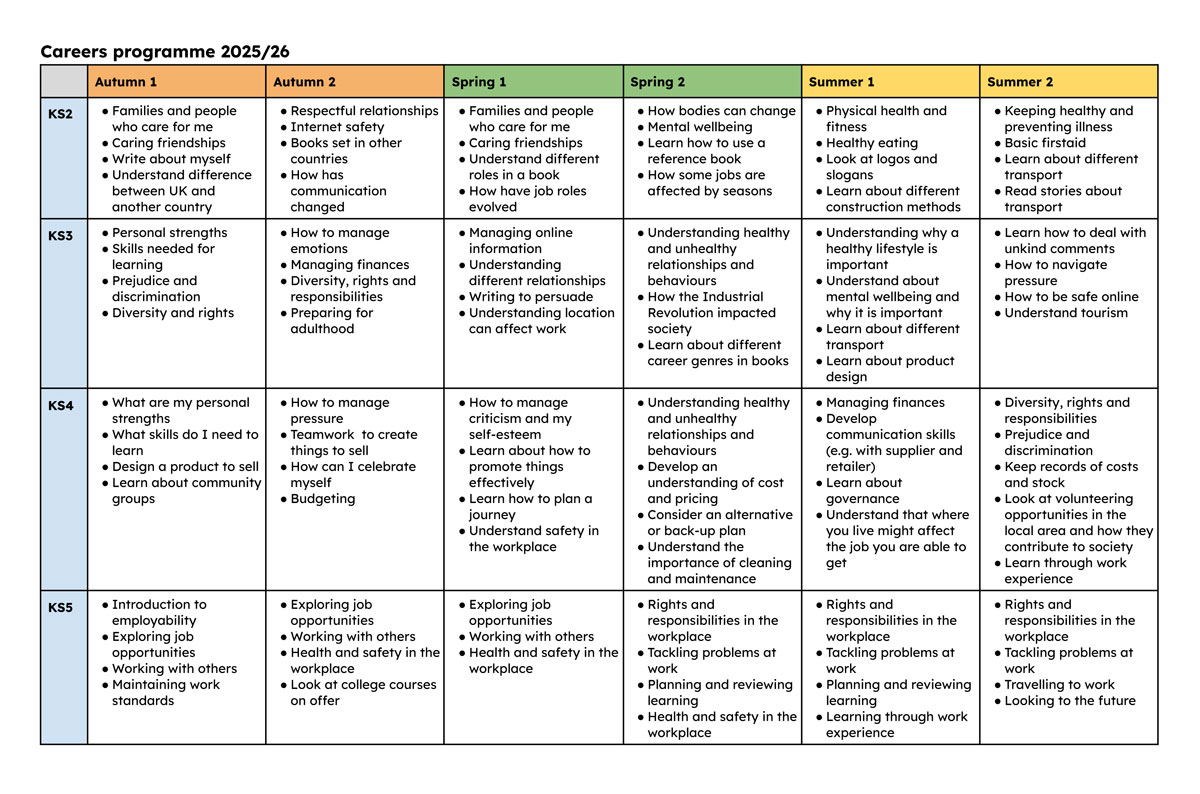
Sidestrand Hall School has a careers programme which has been built into the curriculum in a number of ways, depending on the ability and age of the pupil. For some pupils this is embedded into other subjects of the curriculum, whilst for others it has its own allocated lesson time. 

We support our students in making well-informed decisions by providing access to differentiated impartial and independent information and guidance about the range of options (including academic, vocational, and apprenticeships) that are most likely to help them to achieve their ambitions.

Our careers programme aims to:
  • provide good quality independent careers advice to students which inspires students and motivates them to fulfil their potential;
  • provide personal advice and guidance which is in the best interests of, and meets the needs of, all students;
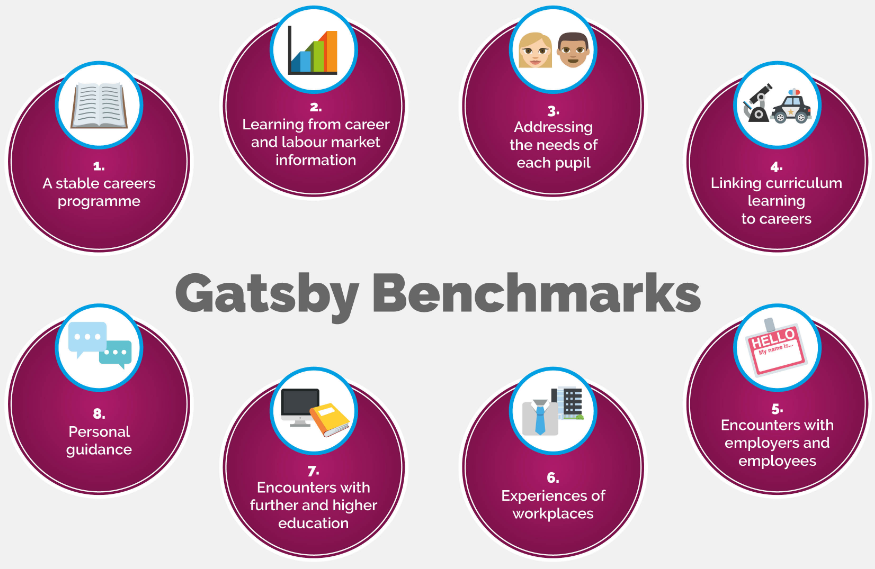
  • be based on the Gatsby Benchmarks for Good Careers Guidance;
  • contribute to the raising of student achievement by encouraging students to develop high aspirations and consider a broad and ambitious range of careers;
  • provide opportunities to inspire students through real-life contact with further education and the world of work;
  • support inclusion, challenge stereotyping and promote equality of opportunity;
  • provide opportunities for meaningful encounters with employees, employers, further and higher education and experience of workplaces;
In order to achieve this our pupils will receive:
  • Careers-related lessons and activities which are both discrete and embedded within the curriculum. All subjects will incorporate transferable skills links to the world of work.
  • Access to careers and labour market information resources via a range of media and delivery channels
  • One-to-one ‘Next Steps’ interviews providing individual rationalised support.
  • • One-to-one ‘Next Steps’ interviews providing individual rationalised support.
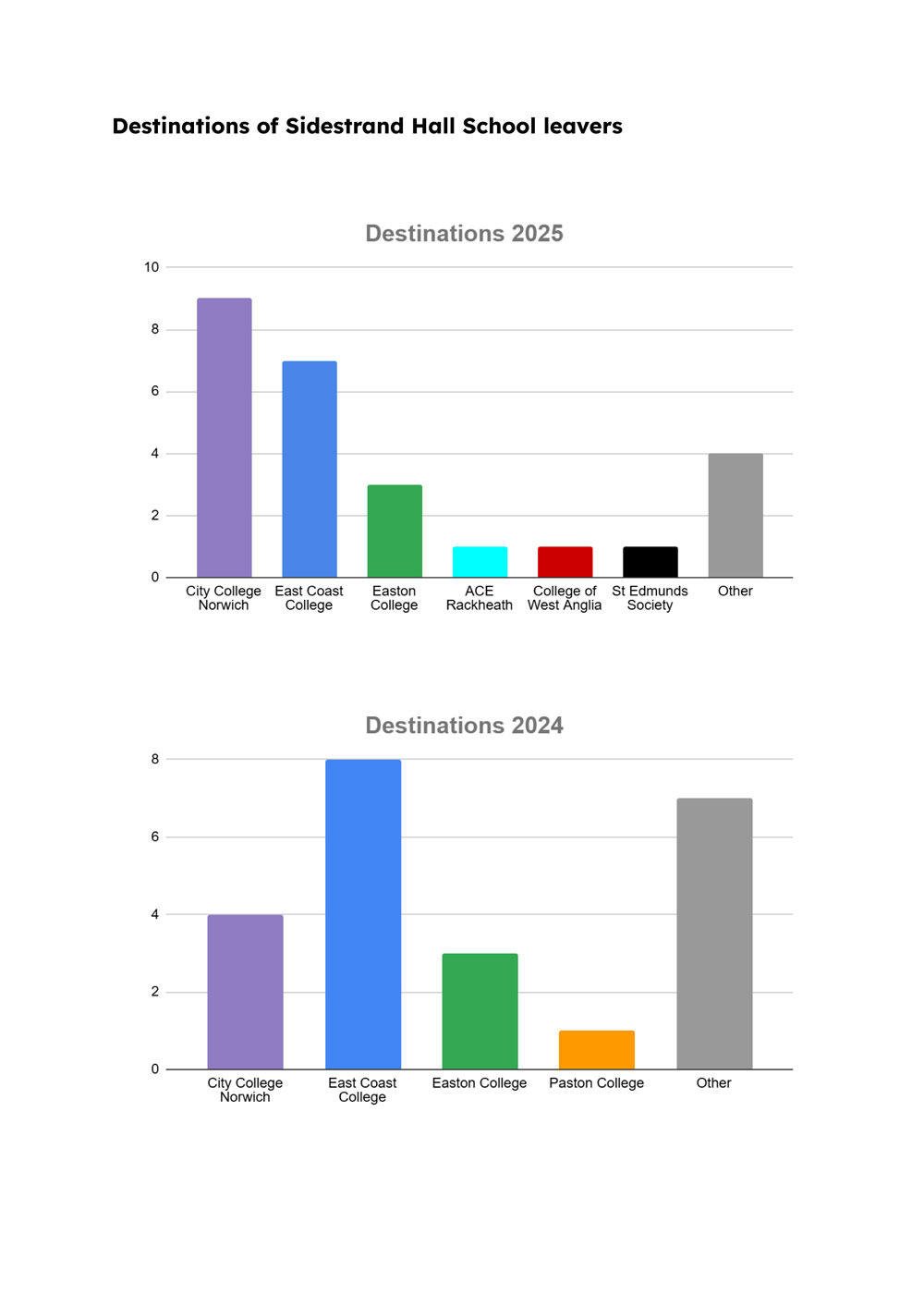
  • Support for decision making and deciding Post-16 options such as further education, apprenticeships or training.
  • A range of opportunities to meet further education and training providers and employers to understand the full range of Post-16 pathways including apprenticeships, traineeships and further education.

Compass

We are very keen to ensure that we deliver the best possible programme for our students and ensure that we evaluate our practice. In order to do this, we meet regularly to plan events and update resources as appropriate. The Careers programme is assessed regularly against the Gatsby Benchmarks through the Compass evaluation process.

Our CEIAG programme is structured around the guidance given by the Gatsby Benchmarks.  This constitutes a framework of 8 Benchmarks (Guidelines) that define the best careers provision in secondary schools.

Labour Market Information (LMI) gives an overview of the world of work. LMI shows employment trends, growing or declining industries, salary ranges and skills or training data. 

Norfolk has a diverse range of employment sectors including agriculture, construction, hospitality and tourism. 

Up-to-date Labour Market Information for Norfolk can be found online here: 

Labour Market ProfileLocal Skills Dashboard

Norfolk Work and Skills Booklet 2023

What is a Supported Internship?

A Supported Internship is a study programme for 16-24 year olds with an Education, Health and Care Plan (EHCP). It combines work in a real job with study and is based with an employer that matches with your skills and interests.

What do you learn on a Supported Internship?

As an intern, you learn new skills that are useful for work. You can complete a personalised study programme which may include the chance to study for relevant qualifications. This could include English and Maths if appropriate. 

How long is a Supported Internship?

They are for a minimum of six months but can be longer.

What types of Supported Internship placements are there?
You could find a placement working in:

Admin support

Food preparation

Construction

Care
Customer Services
Facilities

Management

I.T.

Laboratory work

Horticulture
Retail
Warehouse and more

What happens after my Supported Internship?

When your Supported Internship ends, your job coach will support you into paid employment. This might be the same employer or a different one. 

You can find out more about Supported Internships in Norfolk and the colleges and training providers that offer them at: 

https://www.helpyouchoose.org/send/employment-apprenticeships-traineeships-including-support-into-employment/supported-internships 

Supported Internships offer young people a valuable stepping stone into employment, and may provide them with experience, skills and confidence to take that important step. My role is to support young people through their Supported Internship placement and into employment. My role is hugely rewarding as I get to support some very inspirational young people!

Mark, employment coach

TRANSPORT
Transport for students aged 16-25 years with an Education, Health and Care
(EHC) plan.  More information at –
https://www.norfolk.gov.uk/education-and-learning/school-and-college-transport/special-educational-needs-transport

Young people who have an EHC plan will be entitled to travel assistance to attend sixth form or college, if:

  • They are attending the nearest educational establishment that can meet their needs
  • The educational establishment is named in their EHC plan
  • They live over the qualifying three-mile distance

If your child has an Education Health and Care (EHC) plan there is no need to apply for travel assistance as the Travel Independence Training Team (TITAN) are already assessing who is entitled to travel assistance and if independent travel training might be appropriate for them – you will hear direct from one of the TITAN team soon.

All students are expected to undertake travel independence training, to enable them to use public transport, unless we assess them as unlikely to benefit from such training.

The team will work with students, parents/carers and other professionals.  travel training will take place over the summer holidays with a dedicated travel training ‘buddy’. Visit summer buddy service for more information.

We will keep you up-to-date with the progress of your application. All travel
assistance is provided subject to a financial contribution. This must be paid in
advance, unless the young person will be over 19 years old on 1 September.

Transport for students aged 16-25 years who are attending a special school
If your child will be continuing at a special school beyond the age of 16, travel
assistance will continue to be provided, subject to a review of needs and potential travel training.
You will need to pay the standard parental contribution